Direct Payments
How families can use them to arrange their own care.
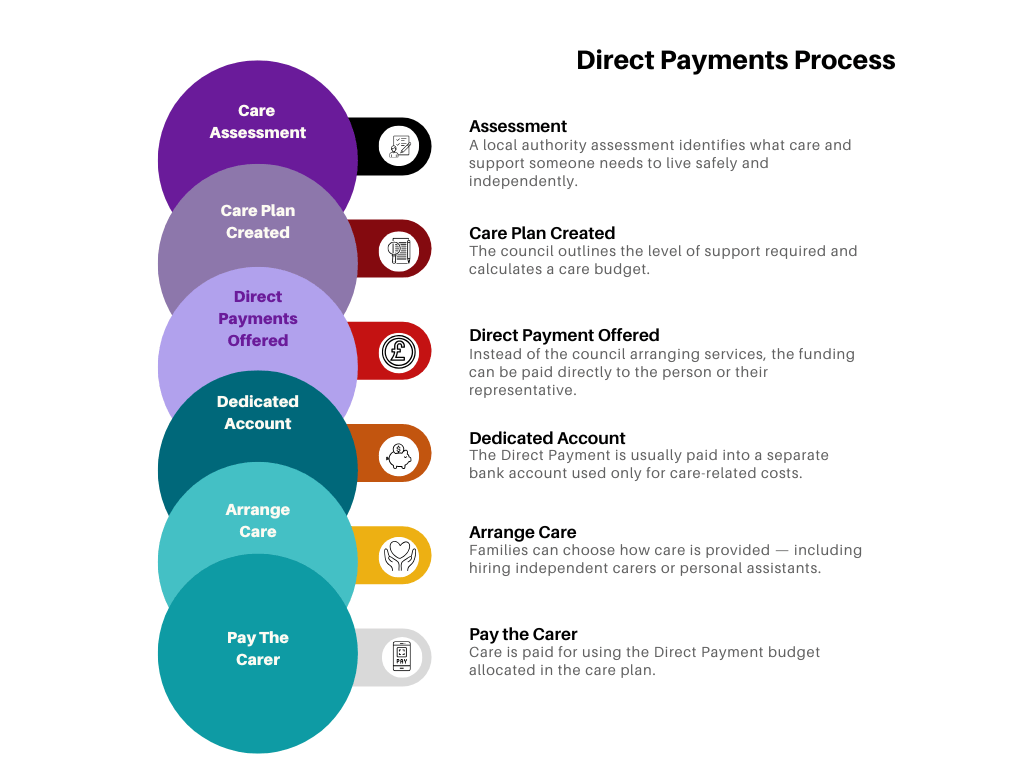
When someone needs help at home, their local council may offer Direct Payments instead of arranging care services on their behalf.
Direct Payments give people more control over who provides their care and how that care is delivered.
Instead of the council organising carers or sending an agency, the funding is paid directly to the person receiving care (or their representative) so they can arrange support themselves.
For many families, this means choosing their own carer, setting schedules that suit them, and keeping care more personal and consistent.
What Are Direct Payments?
Direct Payments are money provided by the local authority after a care needs assessment.
The payment is designed to cover the cost of care and support identified in the person’s care plan.
The money is usually paid into a separate bank account and must be used specifically for the agreed care needs.
Direct Payments can be used by:
Older adults who need support at home
Adults with disabilities
Parents arranging care for a disabled child
People receiving support after illness or injury
What Can Direct Payments Be Used For?
Direct Payments are flexible and can often be used to pay for:
A self-employed carer or personal assistant
Live-in care
Help with personal care, cooking, or household support
Day activities or community support
Respite care
In many cases, families choose to hire a carer directly rather than use an agency.
This can allow for:
Better continuity of care
More personalised routines
Often lower costs compared with agency care
However, the payments must always be used within the rules set by the council and care plan.
What Direct Payments Cannot Usually Be Used For
There are some restrictions.
Direct Payments normally cannot be used to pay:
A spouse or partner living in the same household
Close relatives living in the same home (unless the council agrees there are exceptional circumstances)
General household bills or personal expenses
Services already provided by the NHS
Each council may have slightly different rules, so it’s important to check the guidance.
Responsibilities When Using Direct Payments
With control comes responsibility.
If you receive Direct Payments, you may be responsible for:
Managing the care budget
Keeping records of how the money is spent
Making sure carers are paid correctly
Meeting basic employment or tax obligations if hiring directly
Some councils offer support services or payroll providers to help families manage this.
Why Many Families Choose Direct Payments
Direct Payments give families the ability to build a care arrangement that truly fits their needs.
For many people, the biggest benefits are:
Choice – selecting carers they trust
Flexibility – deciding schedules and routines
Continuity – working with the same carer long term
Control – being involved in how care is delivered
Care works best when it is personal, consistent, and built on trust.
Direct Payments allow families to move away from a one-size-fits-all service model and create a support system that works for them.
Understanding how Direct Payments work can open the door to more flexible and personalised care options.
This article is for general guidance only. Eligibility rules and payment rates may change. For official criteria or to apply, visit the government website or seek independent welfare advice.