🌙 Night Disturbances: What Do You Charge — And Why It Matters
Scroll any care group and you’ll see it:
“If a client wakes up in the night what do you charge?”
The replies range from:
“Nothing, it’s part of the job.”
“£10 per wake-up.”
“My full hourly rate.”
“I don’t charge unless it’s more than 3 times.”
“It depends.”
And that right there is the problem.
Because when pricing becomes random, professionalism disappears.
This isn’t just about money.
It’s about boundaries, sustainability, and understanding what you are actually being paid for.
First: What Type of Night Is It?
Carers often blur three very different things:
1. Sleep Night
You are expected to sleep.
There may be occasional disturbances.
2. Waking Night
You are awake and working throughout the night.
3. On-Call Night
You are allowed to sleep but must respond if needed.
If you don’t define which one it is, you cannot price it properly.
And families cannot understand what they are paying for.
So What Should You Charge?
There isn’t one magic number.
There is a structure.
✔️ Sleep Night (with occasional disturbance)
Flat sleep rate agreed in advance
PLUS hourly rate for actual time awake (if that’s your policy)
Example:
£120 sleep rate
£22 per hour if up more than 20 minutes
Clear. Calm. Professional.
✔️ Waking Night
You are working.
This should be your full hourly rate (often higher due to antisocial hours).
If someone expects you awake from 10pm–7am, that’s not a sleep night. That’s a shift.
✔️ Repeated Disturbances
If a “sleep night” turns into:
4+ wake-ups
Regular toileting
Wandering risk
Hour-long episodes
That is no longer a sleep night.
That is creeping into waking night territory.
And if you keep charging sleep rates for waking work, exhaustion follows quickly.
Factoring in the Reality of Nights
The occasional, unpredictable night where a client needs reassurance, water, or brief assistance is part of live-in care and should be factored into your original pricing.
When you quote for a sleep night, you are accepting that rare disturbances may happen.
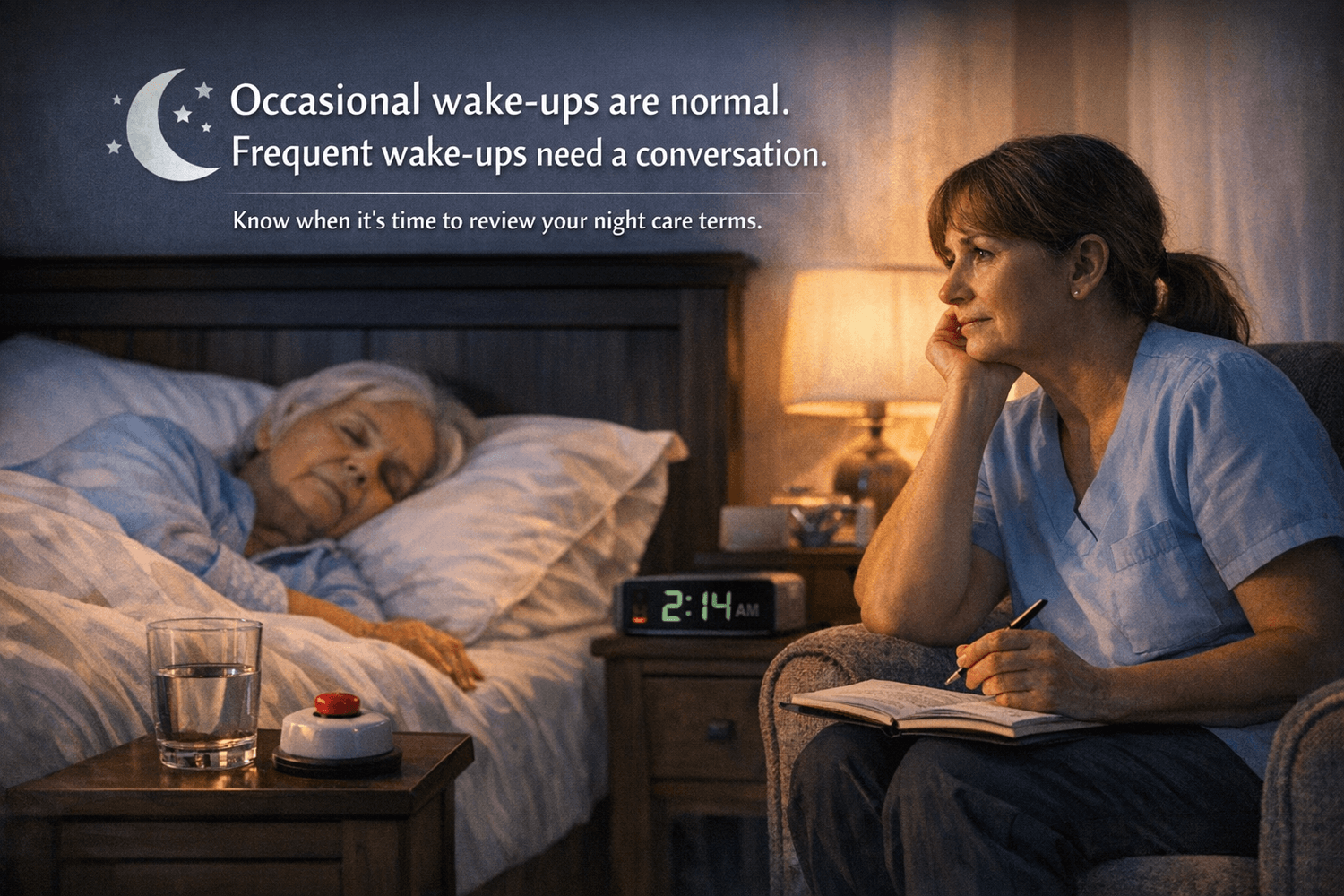
However, if night-time support becomes regular, prolonged, or results in you being awake for more than 20 minutes at a time on a frequent basis, this is no longer incidental. It represents a change in care needs and should trigger a review and renegotiation of terms.
Clear pricing protects everyone from resentment and exhaustion.
Why This Matters
1. Exhaustion is cumulative
You cannot safely support someone if you are chronically sleep deprived.
2. Undercharging creates resentment
Carers don’t burn out because of care.
They burn out because of unclear expectations.
3. Families need clarity too
Many genuinely don’t understand the difference between:
“Just in case”
and“Active night care”
Clarity prevents conflict.
What Agencies Do (And Why That’s Important)
Most agencies differentiate clearly between:
Sleep-in rate
Waking night rate
Enhanced night support
They don’t guess. They price structure.
Independent carers deserve the same professionalism.
The Real Answer to “What Do You Charge?”
The correct response isn’t:
“£X per wake-up.”
It’s:
“What kind of night has been agreed in your contract?”
Because if there is no clause, no structure, no definition —
you’re negotiating at 2am when you’re exhausted.
That’s not business. That’s firefighting. Sustainable care depends on sustainable rest.
If you’re a carer navigating pricing, boundaries, or professionalism in independent care — you’re not alone. This is exactly why communities like Just Care Community exist.